Grid — Carbon-Aware AI Compute Scheduler 🌱 Hackathon Project
Sep 2026
🌱 NYC Climate Week 2026 AI × Climate Hackathon · New York, NY · Sept 19, 2026
A group project — built during a four-hour multidisciplinary hackathon exploring the intersection of AI usage, energy systems, and climate responsibility.
A local compute-management workspace that helps users schedule AI workloads around deadlines, rack capacity, grid conditions, and modeled energy constraints through a live visual control center and a tool-using AI agent.
- Built a persistent FastAPI scheduler that handles priorities, deadlines, earliest-start windows, pausing, resuming, cancellation, one-time events, sequential batches, rack reuse, and preemption of flexible work by urgent jobs.
- Created a Next.js interface with a 3D energy-and-rack view, live job controls, activity history, deadline-risk indicators, and a shared queue that continues advancing even when the browser is closed.
- Integrated an OpenAI Responses API agent with validated function tools for inspecting and safely changing the workspace; tool actions pass through the same validation, revision checks, and SQLite persistence layer as manual controls.
- Added read-only NYISO tools for real grid prices, demand, forecasts, and fuel-mix data alongside clearly labeled modeled facility power, battery, solar, and energy-cost estimates—without presenting simulated compute as measured execution or verified savings.
↗ View the hackathon event
↗ View on GitHub
Skills: TypeScript · Next.js · Python · FastAPI · SQLite · OpenAI Responses API · AI Agents · NYISO Data · Scheduling Systems · Climate Tech
HackyTab — Proactive AI Tab Organizer 🤖 Hackathon Project
Sep 2026
🤖 AI Tinkerers NYC × OpenAI — Agents, Everywhere Global Hackathon · New York, NY · Sept 12, 2026
A group project — built with a team of 3 during the one-day global hackathon.
A proactive Chrome extension that recognizes when a browser window has become crowded and helps users turn tab overload into an organized workspace without moving their work into a separate chatbot.
- Analyzes the tabs already open in the browser, groups them into meaningful task-based categories, and assigns useful names and colors to each group.
- Identifies duplicate and stale tabs while keeping the user in control: HackyTab asks before closing anything and supports undo, redo, and replay.
- Supports multiple AI providers—including OpenAI, Anthropic, and NVIDIA NIM—with a local domain-to-category fallback when a model is unavailable.
- Built as a dependency-free Chrome Manifest V3 extension with no build step or external backend, plus unit and security tests for the core organization workflow.
↗ View the hackathon event
↗ View the hackathon submission
↗ View on GitHub
Skills: JavaScript · Chrome Extensions · AI Agents · OpenAI · Anthropic · NVIDIA NIM · Human-in-the-Loop AI
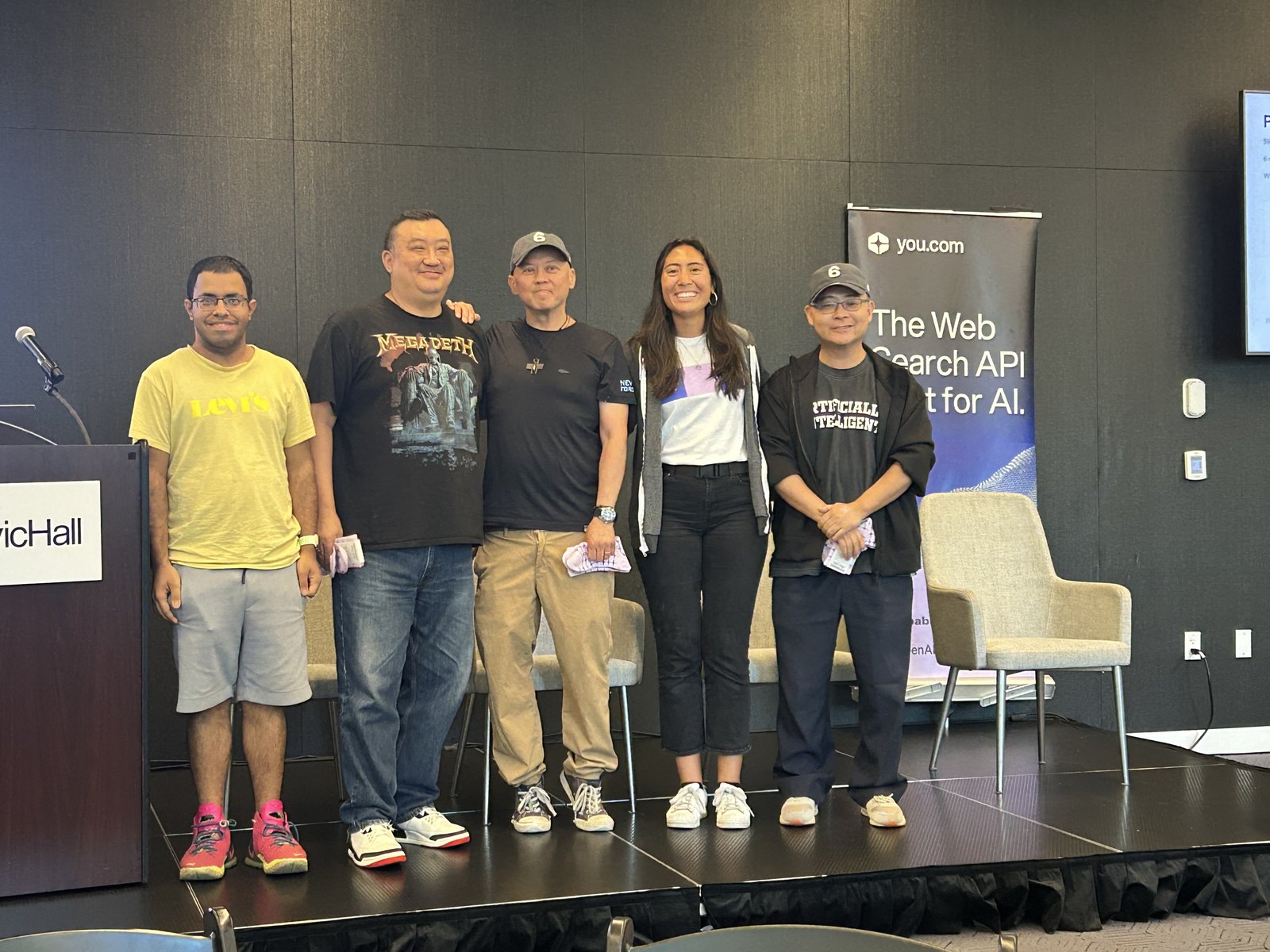
FYOUMONEY — Self-Improving Consumer Recovery Agent 🏆 3rd Place
Sep 2026
🏆 Build with YOU: The AI Agent Hackathon (You.com) · New York, NY · Sept 11, 2026
A group project — built during the one-day hackathon and awarded 3rd Place.
An agent-powered consumer recovery workspace that discovers money people may be eligible to claim from class-action settlements, rebates and redemption programs, and coupons or deals—then helps turn verified opportunities into evidence-backed claim packets while keeping the user in control.
- Used You.com Search and Research APIs to find current opportunities from official sources, verify deadlines and terms, remove duplicate or unsafe results, and avoid assuming that a user qualifies.
- Built a CrewAI analyst-and-auditor flow that converts public class definitions into source-quoted eligibility requirements, preserves exclusions, and blocks progression until missing evidence or individual attestations are addressed.
- Added self-improving discovery through visible agent memory for payout preferences and dismissed matches, making later searches more relevant while letting users inspect, correct, or delete what the agent remembers.
- Integrated Daytona sandboxes for isolated safety checks and One for recipient-free Gmail drafts that users must review and send themselves; no claim is submitted automatically.
 ↗ View the hackathon event
↗ See the LinkedIn post
↗ Watch the demo video
↗ View winning branch on GitHub
↗ View the hackathon event
↗ See the LinkedIn post
↗ Watch the demo video
↗ View winning branch on GitHub
Skills: AI Agents · TypeScript · React · TanStack Start · You.com APIs · CrewAI · Daytona · One · Python · FastAPI
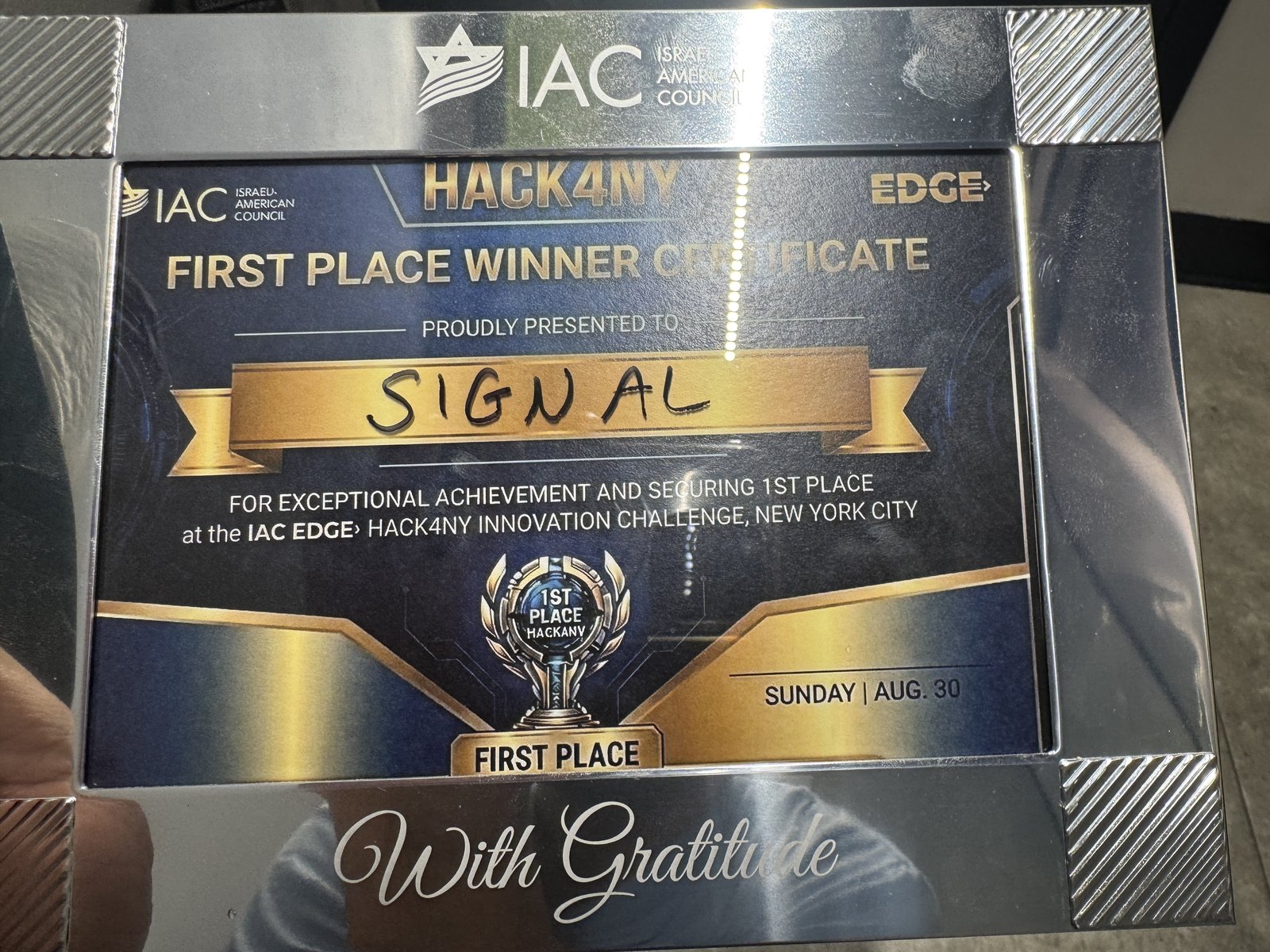
Know Your Officials 🏆 1st Place
Aug 2026
🏆 IAC EDGE Hack4NY: AI for Community Impact · New York, NY · Aug 30, 2026
A group project — built with team Signal during the one-day hackathon, awarded 1st Place.
A trustworthy civic-information platform that turns a U.S. residential address into current federal and state-legislative representatives, clearly scoped official records, and practical ways to contact the right office.
- Built a privacy-conscious address pipeline with keyboard-accessible suggestions, U.S. Census geocoding, and an Open States lookup that sends only coordinates—not the entered street address—to retrieve current officials.
- Displayed literal, source-backed sponsorship, cosponsorship, and roll-call-vote records without inferring political scores or unsupported positions; coverage states make missing or unavailable evidence explicit.
- Created an accessible browser experience with direct call and write actions, message drafting, adjustable text size and themes, a clearly labeled fictional demo mode, and a stateless Node.js REST API documented with OpenAPI 3.1.
 ↗ View the hackathon event
↗ Watch the demo video
↗ View on GitHub
↗ View the hackathon event
↗ Watch the demo video
↗ View on GitHub
Skills: JavaScript · Node.js · REST APIs · Civic Tech · Open States · U.S. Census Geocoder · Accessibility · API Testing
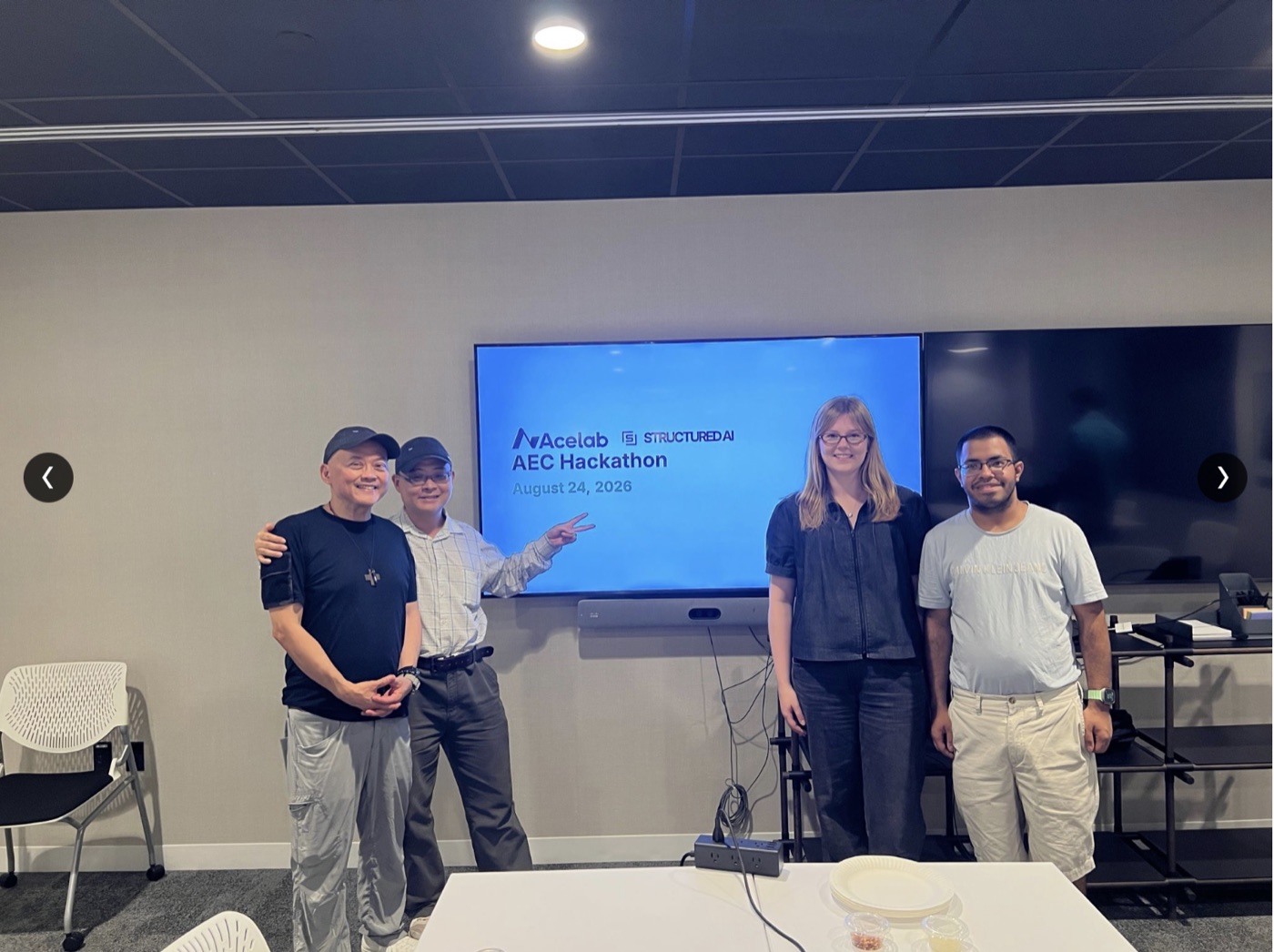
AEC Document Inconsistency Detection Agent 🏆 3rd Place
Aug 2026
🏆 Acelab × Structured AI AEC Hackathon · New York, NY · Aug 24, 2026
A group project — built with a team of 4 during the four-hour hackathon and awarded 3rd Place.
An AI-assisted document-review agent that examines architectural and construction packages to catch inconsistencies that can otherwise surface months later as requests for information, change orders, delays, and avoidable field costs.
- Analyzed relationships across drawings, specifications, schedules, and material data to surface mismatched requirements and conflicting construction details for human review.
- Worked with the event's document-parsing and material-search resources on a shared package containing deliberately planted errors, with submissions scored against verified ground-truth answers.
- Focused the agent on augmenting—not replacing—the reviewer by making discrepancies easier to find before work reaches the field and preserving professional judgment for the final decision.
 ↗ View the hackathon event
↗ See the LinkedIn post
↗ View the hackathon event
↗ See the LinkedIn post
Skills: AI Agents · Document Intelligence · Construction Technology · AEC · Cross-Document Analysis · Quality Assurance
Resolve — Deterministic Permission for Local AI Agents ⚙️ Hackathon Project
Aug 2026
⚙️ Dell × NVIDIA HackNYC · New York, NY · Aug 22, 2026
A group project — built with a team of 5 (myself + 4 others) during the one-day Dell × NVIDIA HackNYC hackathon.
Built by team LAN LORDS, Resolve makes consequential enterprise AI actions verifiable before they execute. A local AI can investigate and recommend a bounded action, while a separate deterministic contract decides whether that exact action is blocked, needs more evidence, requires human approval, or is admissible.
- Orchestrated five logical roles on one local Qwen model — scout, investigator, planner, challenger, and main — behind an eight-gate Python permission contract that fails closed instead of trusting an LLM-generated verdict.
- Bound human approval to the exact candidate fingerprint, evidence, starting state, authority, and expiry; material changes invalidate approval, and every approval is one-use.
- Ran locally on a Dell Pro Max with NVIDIA GB10, used OpenShell for zero-egress containment, and recorded cases, evidence, approvals, verification, and replay in a tamper-evident MongoDB journal without letting the database grant permission.
- Demonstrated a synthetic payment incident where the contract blocks a GLOBAL / 100% failover, admits a policy-bounded 17.4% recovery path only after fresh evidence and approval, and verifies 96.4% success with zero policy violations.
Skills: Python · FastAPI · AI Agents · Qwen · NVIDIA GB10 · OpenShell · MongoDB · AI Safety
↗ View the hackathon event
↗ Open live demo
↗ View on GitHub
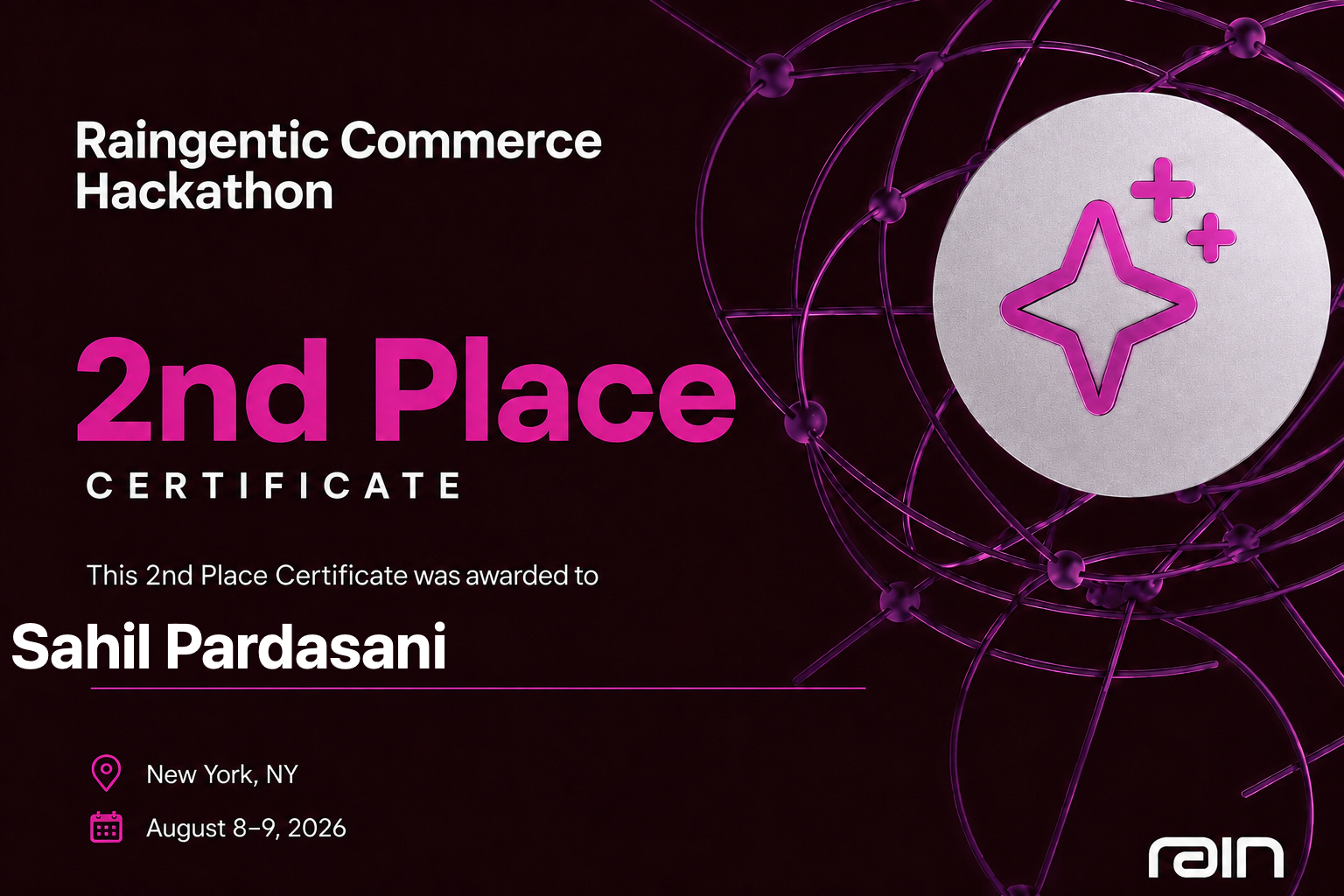
Autonomous Agent Marketplace 🏆 2nd Place
Aug 2026
🏆 Raingentic Commerce Hackathon (Rain) · New York, NY · Aug 8–9, 2026
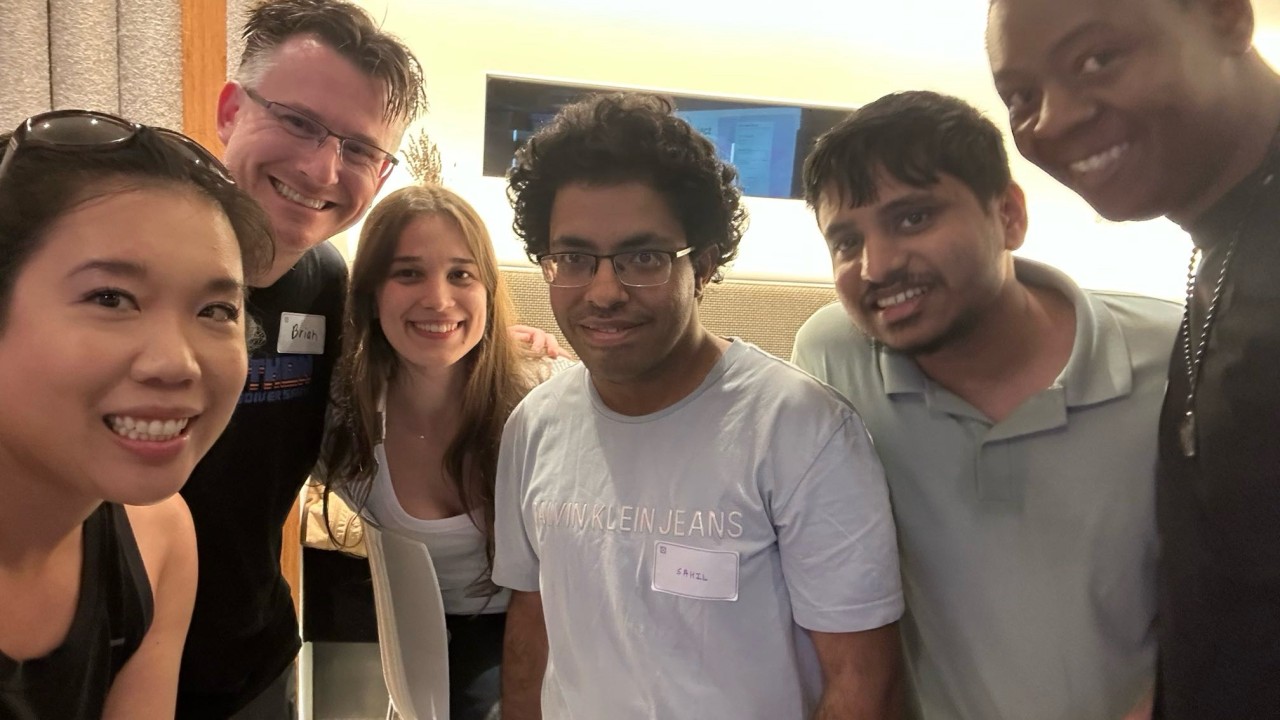
A group project — built with a team of 6 (myself + 5 others) over the 48-hour hackathon, awarded 2nd Place.
A marketplace where AI agents hire other AI agents, pay per call in on-chain micropayments, and rate them afterwards — a generic, domain-agnostic Discover → Pay → Rate primitive.
- Agents pay per call via x402 USDC micropayments on Monad — real testnet settlement in 232–371 ms, enforced by middleware (no payment, no answer; forged signatures get a 402).
- Two rails: sub-dollar x402 advice (~$0.37) drives a real ~$1,700 purchase through Rain scoped cards that are individually spend-limited and merchant-locked.
- An LLM orchestrator routes buyer requests across specialist seller agents; reputation from past ratings decides who the next buyer sees. Worked demo: fully autonomous trip planning + booking.
 ↗ View the hackathon event
↗ See the LinkedIn post
↗ Visit the live project
↗ View the hackathon event
↗ See the LinkedIn post
↗ Visit the live project
Skills: AI Agents · x402 · Monad · USDC · Rain scoped cards · TypeScript · Fintech
NotchIslandSports
May 2026
Architected and deployed a native, high-performance macOS background utility application in Swift, SwiftUI, and AppKit that transforms the physical MacBook screen notch into a responsive, real-time "Dynamic Island" tracking interface. Built the project from the ground up utilizing structured asynchronous network frameworks and robust local data layers.
Key Architectural Engineering Milestones:
- Live Data Ingestion Pipeline: Engineered a robust multi-threaded background polling framework utilizing Combine/async-await tasks to ingest, parse, and synchronize live public server streams across 8 distinct sports leagues (including full IPL, Cricket, and NFL coverage) on rapid 15/30-second cycles.
- Dynamic Geometry Adaptability: Formulated a reactive layout-inspection engine that continuously audits device screen safe-area vectors (
NSScreen.main?.safeAreaInsets). Dynamically scales the graphics pipeline from an ultra-compact 220pt notched capsule to an untruncated 340pt flat-bezel pill on Intel hardware to completely eliminate horizontal text truncation.
- State Arbitration & Caching: Designed a custom rolling recency and fall-back algorithm (
autoSelectActiveMatch()) coupled with a localized in-memory cache to maintain continuous UI stability during transient network dips, seamlessly pivoting the notch display between live events, completed match timelines, and upcoming fixtures.
↗ View on GitHub
arXiv Conference Paper Analyzer
Mar 2026
An intelligent system that autonomously discovers, filters, and analyzes AI/ML papers from top-tier conferences (NeurIPS, ICML, CVPR, ACL, etc.). Uses Groq API for real-time LLM-powered analysis, generating technical summaries and identifying research bottlenecks. Deployed on Render with daily auto-updates and a responsive dashboard. Built with Python, FastAPI, Docker, and HTML/CSS.
Skills: Python (Programming Language), FastAPI, +2 skills
↗ Open live app
Custom Memory Allocator
Oct 2025 – Nov 2025
🦁 Associated with Penn State University
Built a custom memory allocator (my_malloc / my_free) that manages a contiguous heap using Buddy Allocation and Slab Allocation, mimicking malloc/free behavior in C.
Implemented a buddy allocator with power-of-two block splitting, address-sorted free lists, and recursive buddy coalescing to reduce external fragmentation.
Designed a slab allocator that uses a Slab Descriptor Table and fixed-size object slabs, backed by the buddy allocator, including per-object and per-slab headers for efficient reuse and fast allocations.
Skills: C (Programming Language)
Multithreaded Thread Scheduler with Semaphore Support
Sep 2025 – Oct 2025
🦁 Associated with Penn State University
Implemented a custom CPU thread scheduler in C using the pthreads library, supporting three core scheduling policies — First Come First Serve (FCFS), Shortest Remaining Time First (SRTF), and Multi-Level Feedback Queue (MLFQ) — along with counting semaphore synchronization. Designed to simulate real CPU and I/O device interaction on a single-core system, the project produced precise Gantt chart visualizations of thread execution.
Key features:
- Built synchronization with mutexes and condition variables to ensure thread-safe scheduling decisions.
- Implemented preemptive and non-preemptive scheduling behavior per policy.
- Added semaphore wait (P) and signal (V) logic to handle blocking and unblocking of threads.
- Managed concurrent CPU and I/O operations with a deterministic, reproducible timeline.
Skills: C (Programming Language)
Bhagavad Gita WhatsApp Automation Bot (n8n + RapidAPI)
Jun 2025
Built a fully automated WhatsApp bot using n8n, RapidAPI, and CallMeBot that delivers a random Bhagavad Gita verse every day at 9 AM.
- Integrated with Bhagavad Gita API (RapidAPI) to fetch verse translations.
- Used JavaScript logic to randomly select a chapter + verse.
- Encoded and sent messages through CallMeBot's WhatsApp API.
- Scheduled daily automation using n8n's Schedule Trigger.
- Demonstrated no-code/low-code automation and API integration.
LSTM Stock Price Predictor
Jun 2025
Developed a deep learning–based forecasting tool using LSTM to predict next-day stock prices for major tickers (AAPL, NVDA, AMZN, etc.) based on the past 90 days of trading data.
Implemented custom LSTM architecture using PyTorch to capture time series trends. Included real-time error correction by adjusting predictions using the last known forecast deviation. Integrated PostgreSQL to log actual vs predicted prices with auto-skipped duplicates. Streamlit dashboard with dynamic charts and a real-time earnings calendar via finance_calendars.
Skills: Python (Programming Language), PostgreSQL, +1 skill
↗ View on GitHub
ZypherKavach
May 2025
Built an interactive Streamlit frontend for chatting with the Zephyr LLM via Hugging Face inference.
- Engineered multi-layer defenses against prompt injection.
- Regex-based guardrails that block known "ignore instructions" attacks.
- Optional Hugging Face Moderation API integration to flag & drop unsafe inputs.
- Enforced a system-level instruction header so user prompts can't override core rules.
- Persisted every user prompt, model response, and block flag in PostgreSQL for real-time auditing and analytics.
- Showcased practical expertise in AI safety, secure LLM deployment, and threat mitigation.
Skills: PostgreSQL
↗ View on GitHub
Research Method Generation
Apr 2025
Fine-tuned T5-small and BART to generate research methodologies.
Tuned hyperparameters using the Optuna library to maximise ROUGE-L and BERT score performance. Conducted semantic evaluation and model comparison to measure faithfulness and coherence.
NASDAQ Time Series Forecasting with Deep Learning & LLMs
Oct 2024 – Apr 2025
🦁 Associated with Penn State College of Information Sciences and Technology
Collaborated with 9 undergraduate researchers through OSSIG to develop a multi-modal forecasting system for NASDAQ time series data using time-series RNNs and foundation models (e.g., LLaMA 3.0, DeepSeek R3).
- Compared Echo State Networks vs. LSTMs, achieving a 37% reduction in compute time.
- Processed 1,500+ textual and numerical financial reports using Scrapy & BeautifulSoup.
- Integrated sentiment analysis with candlestick data, reducing RMSE by 18%.
Skills: Web Scraping, Deep Learning, +2 skills
Course Scheduler Application
Nov 2023 – Dec 2023
🦁 Associated with Penn State University
Developed a comprehensive, database-driven Course Scheduling Application for a college, featuring both Admin and Student functionalities with a user-friendly GUI. Implemented full CRUD operations and advanced scheduling logic with proper use of object-oriented design principles and PreparedStatements for database integrity and security.
Key Features — Admin Functions:
- Add and manage semesters, courses, classes, and students.
- Display student lists by class (scheduled and waitlisted).
- Drop students or classes with automatic waitlist updates.
Student Functions:
- Schedule classes with automatic waitlist management.
- View and manage class schedules for the current semester.
- Drop classes with dynamic rescheduling for waitlisted students.
Design Highlights:
- Built a modular architecture with over four core Java classes representing database entities and access logic.
- Developed a Derby relational database with strong correlation to object-oriented design.
- Implemented robust GUI components using JComboBoxes and JTables for intuitive user interaction.
- Ensured database updates used SQL PreparedStatements to prevent SQL injection and maintain code clarity.
Skills: Java, Object Oriented Design
Java 2D Drawing Application
Oct 2023 – Nov 2023
🦁 Associated with Penn State University
Built an interactive drawing application in Java that lets users create and customize geometric shapes (lines, rectangles, and ovals) with features like color gradients, stroke styles, and real-time mouse tracking.
Key Features:
- Implemented a combo box–based shape selector and gradient color chooser using JColorChooser and GradientPaint.
- Added Undo and Clear Canvas functionality using an
ArrayList<MyShapes> to manage drawing history.
- Integrated JCheckBoxes and JSpinners to toggle filled/unfilled shapes, dashed lines, and adjust stroke width or dash length dynamically.
- Used event listeners to handle drag-and-draw operations and display mouse coordinates in a live status bar.
- Followed an object-oriented design with a custom MyShapes hierarchy (MyLine, MyOval, MyRectangle) to encapsulate drawing logic.
Skills: Java, AWT, +1 skill